Famber Valley Trek Kashmir (2026 Guide) – Route, Difficulty & Beem Dalav Waterfall
Updated: Sep 2
Hidden deep inside mountains of Chatroo and Marwah Valley lies Famber Valley—one of Jammu and Kashmir's least explored trekking destinations and the largest alpine pasture in Jammu.
Home to the spectacular Beem Dalav Waterfall, warm mountain streams, alpine lakes, trout-filled waters, medicinal forests, and seasonal nomadic settlements.
Famber offers a Himalayan experience that remains remarkably untouched. Unlike the more popular treks of Tosa Maidan or Bangus, you can still spend days here without meeting another trekking group.
This guide covers the Famber Valley trek in Kashmir — including route, difficulty, best time to visit, and what to expect from one of the most unexplored high-altitude pastures in the region.
We had been walking for nearly two hours when our guide, Rafi—a man who rarely wasted words—looked over his shoulder and said quietly, "The waterfall is close now." It wasn't.
Another thirty minutes of climbing through dense medicinal forests lay ahead. But when Beem Dalav finally appeared, framed by towering trees and echoing through the silence of the valley, we understood why locals never try to describe it—they simply tell you to keep walking.
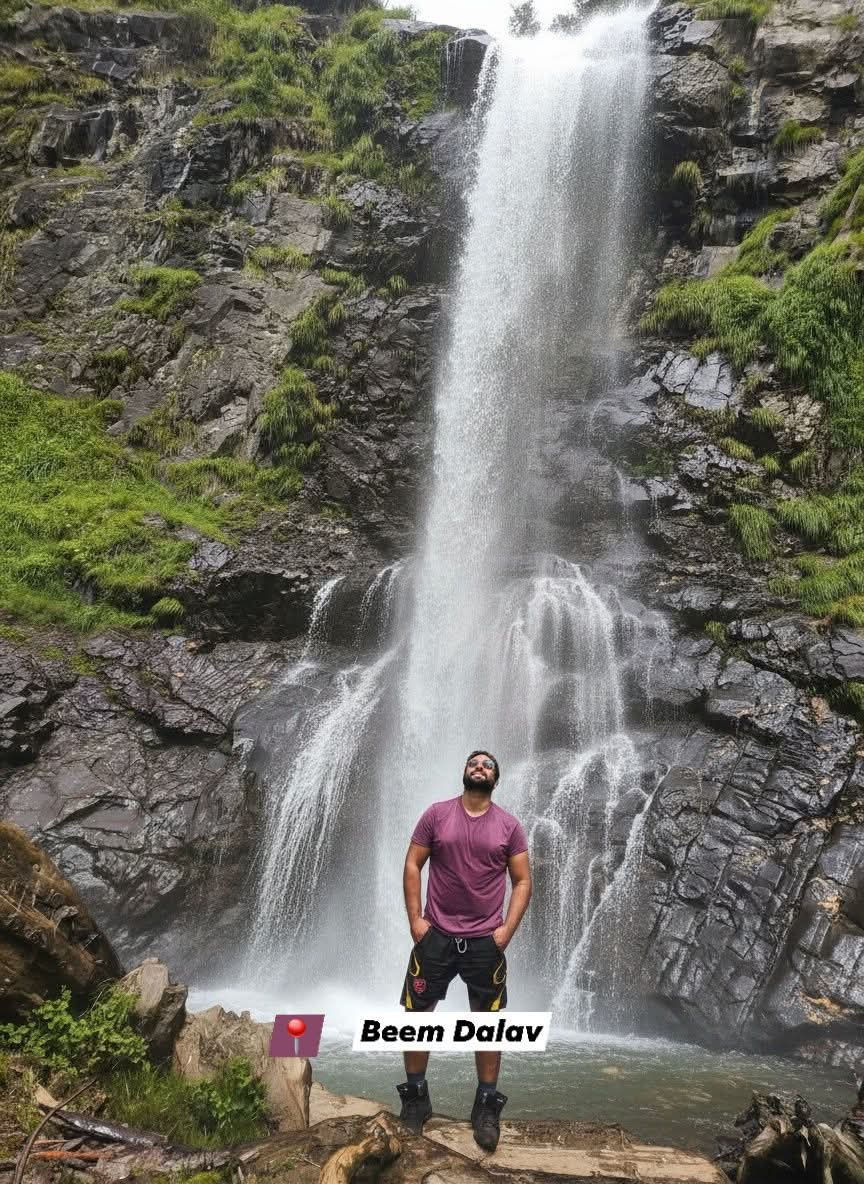
Famber Valley is the largest pasture in Jammu province. It has a waterfall that would feature on the cover of any serious travel magazine. It has warm water streams in the middle of high-altitude meadows. It has trout ,it has alpine lakes. And almost nobody knows it exists. We intend to change that.
How to Reach Famber Valley
Famber Valley can be approached from three directions — Marwah Valley, Simthan Top and Daksum Sheep Farm.
The most easy route is via Marwah Valley.
Route:Srinagar → Anantnag → Daksum → Margan Top → Marwah → Rar Village → Famber Valley
Distance from Srinagar to Rar: Approx. 180–200 km
Driving Time: 6–7 hours
Trek Time: 7–8 hours
Most trekkers stay overnight in Marwah before starting the trek from Rar early the next morning.
Quick Overview — Famber Valley Trek
Location: Kishtwar district, Jammu & Kashmir
Altitude: ~11,000 to 12,000 ft
Trek duration: 7–8 hours (one way)
Difficulty: Moderate to difficult
Best time: July to September
Best for: Experienced trekkers, offbeat travellers
What is Famber Valley — and Why Has Nobody Heard of It?
Famber Valley also written Fambar sits at approximately 11,000 to 12,000 feet in the Kishtwar district, accessible from three directions Marwah Valley via Rar / Astangam village, Simthan Top from the north, and Daksum Sheep Farm from the west. It is the largest pasture in Jammu province.
In summer, it fills with the nomadic communities of South Kashmir shepherds from Pampore and the surrounding villages who bring their herds up when the high ground opens and stay until the first snowfall sends them back down.
The reason most travellers have not heard of Famber is the same reason the valley is still what it is: there is no road no homestay with a booking page.
No sign at the trailhead ,the only way in is on foot, with someone who knows the path, through terrain that does not announce itself or wait for you. This is not a weakness it is the entire point.
We have been to Tosa Maidan. We have been to Bangus Valley. Both are beautiful — we have written about both on this site. Famber Valley is a different category. The combination of waterfall, warm stream, fishing, alpine lakes, high-altitude meadow and nomadic community in one valley, accessible only by foot, with no other tourists present this does not exist anywhere else in Kashmir.
Famber Valley Trek Routes
There are three established routes to Famber Valley. The one you choose shapes the entire trip.
Route | Difficulty | Time | Notes |
Marwah → Rar / Astangam → Famber | Moderate | 7–8 hrs | The most scenic approach. Beem Dalav waterfall on the way. Our recommended route. |
Simthan Top | Difficult | 8–10 hrs | Steep and unforgiving. Only for experienced trekkers with prior high-altitude exposure. |
Daksum Sheep Farm | Moderate | Long day | Longer but gentler gradient. Good option from Daksum base. |
We chose the Marwah route — via Rar village — for the same reason we recommend it: the Beem Dalav waterfall is on this approach, and arriving at Famber through the waterfall and the Dolvas viewpoint is the correct sequence. You understand what you are walking into before you arrive.

Looking to Explore Offbeat Kashmir?
Discover lesser-known valleys, villages and landscapes beyond the usual tourist circuit, with private transfers, carefully planned stays and personalised experiences.
Day 1 Rar to Famber — The Ascent That Tests Everything
We left Rar at 8 AM Shahid, had been clear start early or lose the golden hour at Dolvas. We started early. The ascent from Rar is continuous there is no flat section, no false summit that gives you a moment's relief before the real climb begins.
It goes up from the first step and keeps going up, through forest, over exposed ridgeline, back into forest. By the time we had been walking for an hour, the four of us had stopped talking not from exhaustion, but because the forest demanded a different kind of attention.
The smell that dizzied us — Himalayan herb forest
The forest on the Rar ascent is dense with wild herbs the same plants that form the basis of traditional Himalayan medicine, growing in concentrations high enough that the smell is a physical presence.
Overpowering in the best possible way the way certain spice markets are overpowering but also disorienting. Shahid started walking with the slightly careful step of someone recalibrating.
Nayeem noticed and said this is normal here. The plants are strong ,keep drinking water. He also mentioned, in the same tone, that this is Himalayan Ibex habitat.
That the ibex have been here long enough to be comfortable, which means the snow leopard comes. He said it the way a local says something he has known so long it barely registers as remarkable. We stopped walking and looked at the forest around us with different eyes.
Beem Dalav waterfall — the moment the trek earns itself
Forty-five minutes to an hour from Rar, depending on pace, the trail arrives at Beem Dalav.
The waterfall is not a trickle over mossy rock. It falls with the full conviction of snowmelt from high terrain, into a basin ringed by forest so old and dense that the light arrives filtered and green. The sound fills the space entirely.
The colour of the water somewhere between turquoise and white, carrying the mineral signature of the alpine terrain above is the colour that made Rafi put his phone away and just look. We stayed for thirty minutes. We should have stayed longer.
Beem Dalav meadow - namkeen chai and altitude
Above the waterfall, the forest opens into Beem Dalav meadow - the first proper high-altitude grassland on the route. A nomadic hut sits at the edge of it , we stopped.
The host we did not catch his name, only that he had come up from Punjab with his family and animals brought namkeen chai without being asked.
Salt tea at altitude after an hours-long ascent is not a refreshment it is a restoration. We drank it looking out at a meadow with mountains behind it and nothing else visible in any direction.
Dolvas — the viewpoint at golden hour
Muhammed had timed it correctly we reached Dolvas at golden hour the light arriving from the west at the angle that turns every meadow in Kashmir into something that looks unreasonably beautiful, and turns Dolvas into something that looks unreasonably Kashmir.
The viewpoint at Dolvas looks out across the full approach to Famber - the valley below, the ridgeline above, the Kishtwar peaks visible in the middle distance.
We took photographs ,we made the reels we had promised ourselves. And then we descended to the valley as the light failed.

First night — nomadic hut and light drizzle
The nomadic hut at Famber belonged to a family from Chatru. They gave us a section of it for the night. We set up outside tents on the meadow, the valley around us, the stars above visible between clouds. At 3 AM, light drizzle arrived and we moved inside.
The sound of rain on the canvas of a nomadic hut at high altitude is one of the better sounds available to a person who has had a long day of walking.

Day 2 The Warm Stream, the Fish and the Shepherds
Rafi was at the stream before the rest of us were fully awake. He had brought a fishing permit arranged in advance, the legal requirement for trout fishing in this area and he had specific intentions for the morning.
We found him an hour later, crouched at the bank of the Famber stream, entirely focused. He had already caught two.
The warm water stream — the detail that surprises everyone
The Famber stream has a quality that nobody who has not been here expects and nobody who has been here forgets: the water is warm.
Not warm like a bath warm like water that is not cold — which in the context of a high-altitude Himalayan stream at dawn is a sensory experience that requires recalibration.
Mountain streams at this altitude are, by all reasonable expectation, cold enough to make your feet ache after thirty seconds.
The Famber stream is not ,the geological explanation involves warm underground springs feeding into the stream from below the same thermal activity that produces the Tata Pani hot spring in Marwah Valley, operating at a lower temperature and at much greater altitude.
We bathed in it all four of us, in a stream at high altitude in Kashmir, in water that was genuinely warm. This is not something that happens at Tosa Maidan or Bangus. This is Famber.
Trout cooked on the meadow — with Maggi on the side
There is a specific pleasure in cooking something you caught yourself, on a trekking stove, on a meadow at 11,000 feet, with the mountains present in every direction. The trout went into the pan with butter and salt.
The Maggi went into boiling water alongside it both were ready within fifteen minutes. We ate sitting in side kashmiri shepherd hut .
The combination of fresh-caught trout and packet noodles at high altitude, with four friends and a guide who understood that the correct response to this moment was silence, is one of the finer meals available to a person who travels in Kashmir.
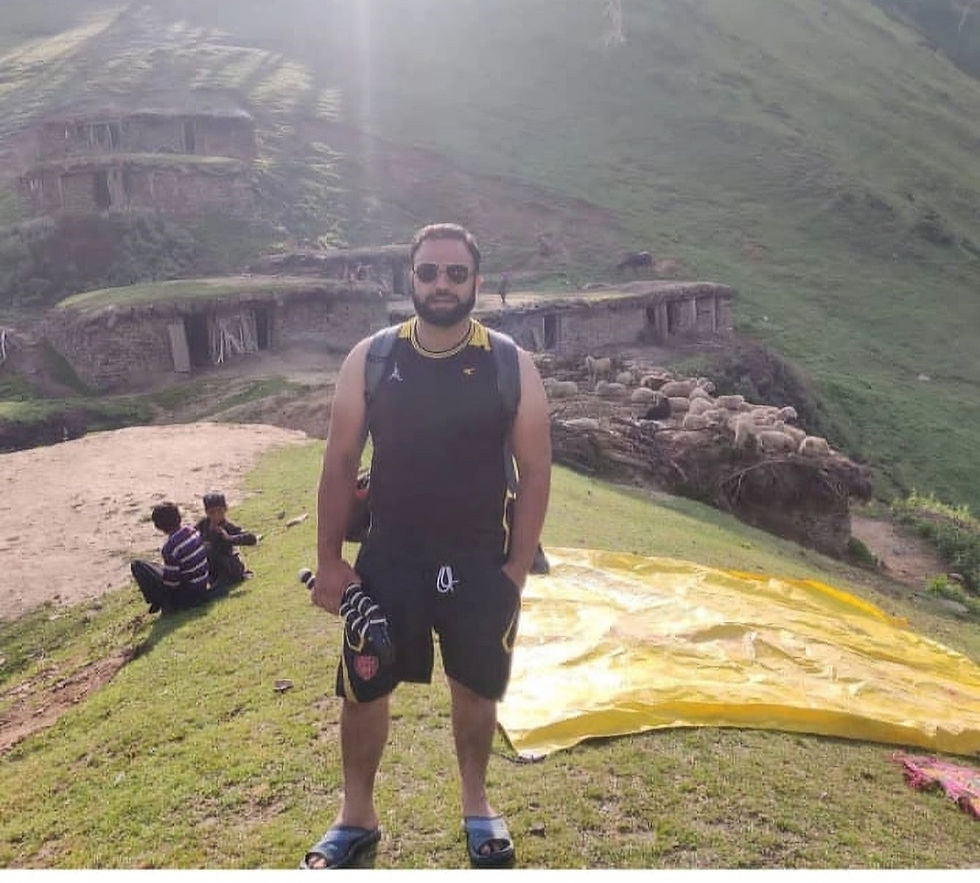
The shepherds — from Pampore and South Kashmir
In the afternoon, we walked further into the valley and encountered a larger nomadic settlement families from Pampore and surrounding South Kashmir villages, up for the summer with their herds.
The welcome was what it always is in these communities: complete and immediate, without reservation or performance.
We sat with them for an hour ,drank more namkeen chai. Listened to what the season had been like the weather, the grass, the routes.
They asked where we were from. They asked if we had been to Marwah we said we had. They nodded as if this confirmed something about us. These communities are the reason Famber Valley looks the way it does.
The grazing patterns, maintained across centuries of seasonal migration, have shaped the meadow into its current form.
Without the herds, the high-altitude scrub would reclaim the open grassland within a decade. The nomads are not visiting this landscape. They are maintaining it.

Day 3 The Return — and the Mysterious Stone Structure
We chose a different route back. Rafi said there was something worth seeing.
The welcoming shepherds on the descent
The descent from Famber on the alternate route passed through a shepherd settlement we had not encountered on the way in.
A different family, a different section of the valley, the same immediate hospitality. We stayed overnight in the village proper shelter, a fire, food from the community's own supplies.
The kind of night that reminds you what travel is for before the infrastructure of tourism reminds you what it has been turned into.
The mysterious park-like meadow with stone structure
The following morning, three to four hours into the descent, Rafi the guide brought us to a place that had no name we could find in any record or map we subsequently checked.
A small meadow, set apart from the surrounding terrain by a geometry that felt deliberate enclosed, level, with the particular flatness of ground that has been shaped by human intention.
And in the centre of it, a stone structure not a ruin, exactly. Not intact enough to be read as a building.
Old enough that the stone had been absorbed back into the landscape, lichened and settled, indistinguishable in colour from the natural rock around it except in its arrangement.
Who built it. When. For what purpose. Rafi said the shepherds call it old — old in the way they mean when they mean very old, older than anyone's grandfather's grandfather.
We did not find a better answer. We photographed it from every angle. It sits in the descent route between Famber and Marwah, known to the nomadic communities and to almost no one else.

The cliffs and the final descent to Marwah
The last section of the return brought us along cliff faces — exposed, scenic, the kind of terrain that makes you aware of the altitude in your legs rather than your lungs.
The cliffs look down over the approach to Marwah Valley — the Maru Sudar visible below, the bowl geometry of the valley becoming apparent from above.
We reached Marwah in the late afternoon. Tired, well-fed, sunburned, carrying the particular weight of a trip that had been better than we had any right to expect.
Famber vs Tosa Maidan vs Bangus — The Honest Comparison
We have been to all three. Here is the comparison without diplomatic hedging.
| Famber Valley | ||
Altitude | ~11,000 ft | ~10,000 ft | ~11,000–12,000 ft |
Waterfall | No | No | Beem Dalav — spectacular |
Trout fishing | No | No | Yes — legal permit available |
water stream | Yes | yes very small | Yes |
Alpine lakes | Greater Lakes | Not sure | Yes — within the valley |
Nomadic hospitality | Yes | Yes | Yes |
Crowd level | Growing | Low | Near zero |
Guide required | Recommended | Recommended | Essential — no marked trail |
Tosa Maidan and Bangus are excellent destinations. We have written about both on this site and we recommend both. But Famber Valley is a different proposition the combination of features — waterfall, stream, fishing, alpine lakes, nomadic huts, near-zero crowds, and a mysterious stone structure that nobody has catalogued — does not exist anywhere else in Kashmir at this level of access. Tosa Maidan is one feature: the meadow. Bangus is one feature: the scale. Famber is six features in two nights of walking.
If you have done Tosa Maidan and Bangus and you are looking for what comes next — Famber Valley is the answer. If you have not done any of the three and you want to start with the best one — Famber Valley is also the answer.
Planning a Famber Valley trek? We connect you with Rafi — the guide who knows this route. WhatsApp: wa.me/916006464123
Everything You Need to Know Before You Go
Detail | What you need to know |
Location | Kishtwar district — accessible from Marwah Valley, Simthan Top or Daksum |
Best route | Marwah Valley → Rar village → Beem Dalav waterfall → Dolvas → Famber. Most scenic, moderate difficulty. |
Trek duration | 7–8 hours Rar to Famber. Continuous ascent from Rar. Start no later than 8 AM. |
Best season | August — streams warm, wildflowers peak, nomadic communities present. May–September overall. |
Stay | Nomadic huts (hosts from Chatru and South Kashmir communities). Camping outside the huts also possible. |
Trout fishing | Legal permit required — arrange in advance. Rafi fished the morning of Day 2. Cook your catch on a camp stove. |
Guide | Rafi is the guide. No marked trail beyond Rar — a guide is not a recommendation, it is a requirement. |
Altitude sickness | The forest herbs on the ascent produce a distinctive smell that can cause dizziness. Ascend slowly. Drink water. Do not push through dizziness. |
What to carry | Camping gear (2 nights). Trekking stove and food. Fishing permit if planned. Waterproof layer . Emergency medical kit. |
Trek difficulty — honest assessment
The Marwah–Rar–Famber route is classified as moderate, but the word moderate needs context. The ascent from Rar is continuous there is no easy section.
Altitude sickness is possible above the treeline: the herb forest produces genuine dizziness in some people, and the altitude compounds it.
Fitness is required ,prior trekking experience is strongly recommended. This is not a gentle meadow walk. It is a 7 to 8 hour uphill day that rewards the effort with extraordinary disproportionality.
Why a guide is not optional
There is no marked trail from Rar to Famber. The path exists in the knowledge of guides like Rafi — it is not signposted, not mapped in any resource available to travellers, and not findable by GPS navigation because it does not appear on any digital map.
We know this because we checked before we went. Getting lost on this route is not a minor inconvenience. It is a serious problem at altitude. Rafi is the guide. We connect you directly.
Frequently Asked Questions About Famber Valley
Q: How do I reach Famber Valley from Srinagar?
The recommended approach is Srinagar → Margan Top → Warwan → Marwah → Rar village → Famber Valley. Total driving time from Srinagar to Rar: approximately 6–7 hours. Trek from Rar to Famber: 7–8 hours. A two-day approach — overnight in Marwah, then start the trek from Rar the following morning — is the correct configuration.
Q: Can I do Famber Valley as a day trip?
No. The 7–8 hour trek from Rar to Famber rules out a same-day return. Two nights minimum at Famber is the right approach — one night does not give you enough time in the valley. Three days total (including both trekking days) is the trip we describe in this blog and the one we recommend.
Q: Is trout fishing permitted in Famber Valley?
Yes, with a legal permit. Arrange the permit in advance — we handle this for all guests booking through us. The Famber stream has trout. The fishing is genuine, not staged.
Q: What is the best time to visit Famber Valley?
August is the optimum month — streams are warm, wildflowers are at peak, all three routes are fully open, and the nomadic communities are present for the cultural interaction that makes the valley what it is. May through September is the overall accessible window. Avoid early June when snowmelt makes stream crossings genuinely difficult.
Q: Is Famber Valley Suitable for Beginners?
The trek is not recommended for complete beginners. While technically straightforward, the route involves 7–8 hours of continuous ascent from Rar village and reaches altitudes above 11,000 feet. Previous trekking experience and reasonable fitness are strongly recommended.
Q:Can I Camp in Famber Valley?
Yes. Most visitors either camp in the valley or stay with nomadic families during the summer grazing season. Camping remains the most immersive way to experience the valley.
Come Before the Trail Gets a Signpost
There will come a day when Famber Valley has a trekking app route, a blog on every major travel platform, and a designated camping zone at the waterfall. The nomadic families will still be there. The ibex will still move through the high terrain above.
The warm stream will still run. But the experience of arriving somewhere that has not been prepared for your arrival — of finding the Beem Dalav waterfall with no other group at the base of it, of eating freshly caught trout on a meadow where your guide is the only person who knows the way home, of bathing in a warm stream at altitude and having no explanation for it that satisfies — that experience has a closing time.
We went in a group of four: Shahid, Nayeem, and a guide who speaks in understatements. We came back with three days of memories that none of the four of us have described adequately since. The mysterious stone structure on the descent is still unidentified. The warm water is still warm. Rafi is still in Marwah.
We are Tribesmen Travels, Srinagar. Famber Valley is the most extraordinary trekking destination we have sent guests to in Kashmir. We arrange everything — guide, permits, camping, transport from Srinagar. WhatsApp us and we will build your three days in Famber from the ground up.
Plan My Famber Valley Trek — WhatsApp: wa.me/916006464123 | +91 600 6464 123


Comments