Autumn in Kashmir 2026: Chinar Fall, Weather & Best Places
Updated: Sep 2
The Kashmir Most People Miss
Most people plan Kashmir around its most famous seasons — spring for the tulips, summer for the green meadows and Gondola, and winter for the snow. But somewhere between these well-known seasons, Kashmir quietly changes character.
From around mid-September to mid-November, the valley begins its transition into autumn. The Chinar trees slowly turn shades of yellow, orange and deep red, the saffron fields of Pampore come alive, apple orchards are busy with harvesting, and the paddy fields across rural Kashmir take on a golden hue.
There is also something else that makes this period special: the crowds begin to disappear.
The roads feel easier, sightseeing becomes more relaxed, and places that can feel busy during the summer months suddenly have room to breathe.
Hotel prices can also be considerably more attractive than during the peak season, making autumn an interesting option for travellers looking for a more premium experience without the peak-season rush.
For couples, it can mean quieter Shikara rides and peaceful evenings. For families, it means more comfortable sightseeing with fewer crowds. For photographers, it is one of the most visually rewarding times of the year.
And then there are the little things that make autumn feel distinctly Kashmiri — a warm cup of kehwa on Dal Lake, an evening BBQ , the first taste of harissa as the mornings turn colder, or simply standing beside a clear mountain stream and watching the autumn landscape reflected in the water.
Autumn isn't necessarily the best time for everyone but if you want to experience Kashmir at a slower pace, with fewer crowds, crisp mountain air and the valley turning gold around you, September to November deserves a place on your travel calendar.
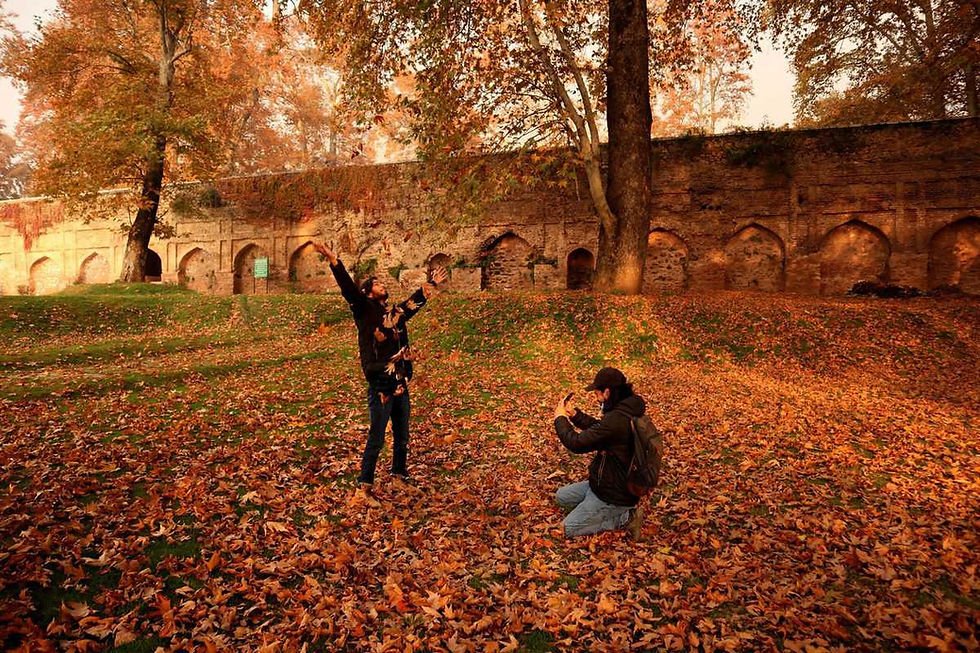
Quick Overview: Autumn in Kashmir
Autumn is one of the most underrated times to visit Kashmir, especially from mid-September to mid-November.
Best time: Mid-September to mid-November
Best Chinar colours: Around October 20 onwards, with timing varying each year
Best month for autumn colours: October
Saffron season: October, particularly around Pampore
Weather: Pleasant days with increasingly cold mornings and evenings
Crowds: Much lower than the March–June peak season
Hotels: Some properties can be 30–40% cheaper than peak season, depending on dates and demand
Best places: Nishat Bagh, Shalimar Bagh, Kashmir University, Dal Lake, Pampore, Pahalgam, Gulmarg and Sonamarg
For couples: Excellent for a quieter Kashmir honeymoon with fewer crowds
For families: Comfortable sightseeing with less congestion
Snow: Possible at higher elevations in October–November, but never guaranteed
Local experiences: Shikara ride with kehwa, saffron harvest, apple orchards, paddy harvest and seasonal harissa
Is Autumn a Good Time to Visit Kashmir?
Yes, for most travellers the main caveats are weather-related: autumn in Kashmir is not a single consistent experience.
September is still warm and relatively accessible october sees the Chinar colour beginning to develop properly, with the most noticeable transformation usually arriving around the third week of the month.
November brings cooler temperatures and, at higher elevations, the possibility of early snowfall — though this is not guaranteed and depends entirely on the weather pattern of a given year.
The honest answer is that autumn suits travellers who are flexible about weather and who value the quieter, more personal experience that comes with lower visitor numbers.
It does not suit travellers who need guaranteed sunshine every day or who specifically want the summer meadow experience at Gulmarg and Pahalgam.
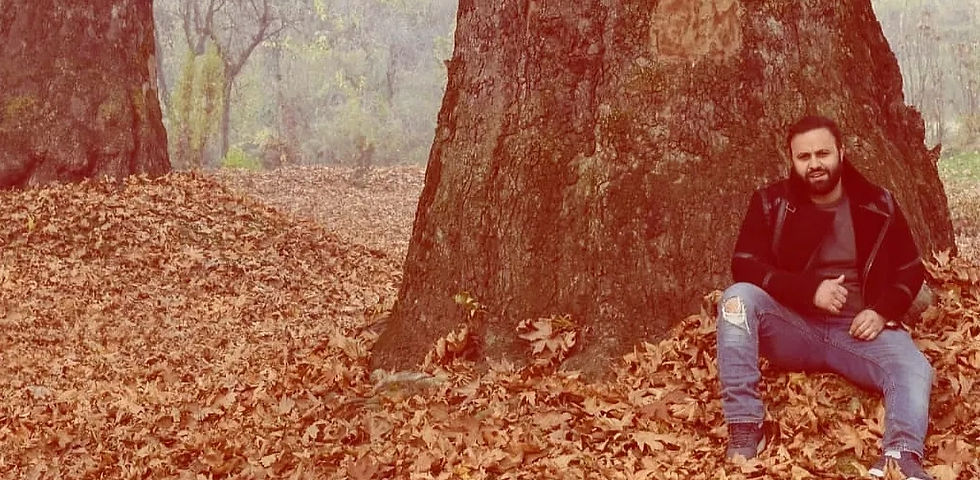
When Does Autumn Begin in Kashmir?
Kashmir's seasons do not follow a strict calendar the Chinar trees — the defining visual of Kashmir's autumn — begin showing colour in October, but the timing varies year to year.
The real transformation, when the Mughal Gardens at Nishat and the avenues around Srinagar genuinely appear golden-to-rust, typically becomes apparent from around October 20 onwards.
Before that, September and early October have their own character: cooler than summer, still largely green, with the paddy harvest and apple season in full activity across the rural districts.
The season builds gradually rather than arriving overnight, which means that travellers in early October will see a different Kashmir from those arriving in the last week of October — both valid, both worth experiencing, but noticeably different.
Why Autumn in Kashmir Feels Different
Kashmir's major tourist season runs from approximately March 20 — when the tulip bloom opens at Indira Gandhi Memorial Tulip Garden — through to late June.
During this period, and especially in May and June, the valley sees its highest visitor volumes. Gulmarg, Pahalgam, and the Dal Lake waterfront are busy in ways that are perfectly manageable but that do change the character of the experience.
Autumn inverts this the roads through Pahalgam are quieter. The Mughal Gardens can be walked without navigating around large tour groups.
A Shikara ride on Dal Lake in October has a different quality from the same ride in June — not better necessarily, but slower, cooler, less populated, more suited to sitting still and paying attention.
Hotel rates in autumn can sometimes be approximately 30–40% lower than peak season prices. This varies by property, dates and demand — it is not a guaranteed discount — but the pattern is consistent enough to be worth factoring into your planning.
For honeymoon couples in particular, this matters. Kashmir in summer is romantic in the way that crowded, beautiful places are romantic — the grandeur carries the experience. Kashmir in October is romantic in a more private way. The beauty is the same; the audience is smaller.

Kashmir Month by Month: September, October, November
Kashmir in September
September is the transition month the heavy tourist traffic of the summer has reduced but the landscape has not yet shifted into its autumn colours.
Temperatures are still comfortable — daytime temperatures in Srinagar can be in the mid-to-high twenties in September — and the higher-altitude destinations of Gulmarg and Sonamarg are fully accessible and far less crowded than they were in July.
The paddy fields across the Kashmir Valley are at their most active in September, and rural Kashmir during this period has a particular agricultural quality that is worth seeking out if you are travelling beyond the main tourist circuit.
The apple harvest is also underway in the orchards of Shopian, Pattan, and Sopore — an aspect of the valley's autumn that is easy to miss if your itinerary stays close to Srinagar.
Kashmir in October
October is the heart of the autumn experience the Chinar trees begin changing colour as the month progresses, and by the final week of October, Nishat Bagh, Shalimar Bagh, and the avenues around Kashmir University are in the kind of condition that photographers specifically plan trips around.
Daytime temperatures remain pleasant in the first half of October — often in the low twenties in Srinagar — before becoming noticeably cooler as the month progresses.
Mornings and evenings in Pahalgam and Gulmarg require a proper jacket by mid-October. The Lidder Valley in Pahalgam and the Gulmarg meadow both take on a different quality in the October light: sharper, more defined, with the colours of the changing forest more visible against the mountain backdrop.
October is arguably the strongest month for autumn Kashmir travel — the Chinar colour is developing, the saffron harvest in Pampore is underway, and the weather is still generally cooperative.
It is also when the season's reduced hotel rates and quieter sites are most likely to align with genuinely beautiful conditions.

Kashmir in November
November is the late-season option, and it requires the most realistic expectations. Temperatures drop significantly, particularly in the higher-altitude destinations.
Gulmarg and Sonamarg see cold nights well before Srinagar does, and by November these destinations are moving towards their winter character rather than their autumn one.
Srinagar and the Dal Lake area remain accessible and interesting through most of November, and for travellers who want the Chinar colour without the October crowds, early November can offer the combination.
By mid-November, the season is effectively over, and the valley is preparing for the first winter snowfall at higher elevations.
If early snowfall happens to coincide with your November visit, it is worth noting that this can be spectacular at places like Gulmarg — but it is not guaranteed, and planning a trip specifically around the expectation of early snow is a gamble that weather in the western Himalayas does not reliably accommodate
Best Places to Experience Autumn in Kashmir
Srinagar and the Mughal Gardens
The three main Mughal Gardens — Nishat Bagh, Shalimar Bagh, and Chashme Shahi — are the most obvious places to experience the Chinar colour in Srinagar.
Nishat in particular, with its terraced design and the lake beyond, is at its most visually compelling in late October when the Chinars on its upper terraces are fully in colour.
The Chinar trees are large, old specimens — some of them planted in the Mughal era — and their autumn colour is not a subtle affair.
When the light is right, typically in the late afternoon, the effect of these trees against the Zabarwan Hills background is genuinely striking. Arrive early in the morning to have the gardens at their quietest.
Kashmir University
This is one of the autumn spots that most visitors miss, and that is precisely what makes it worth including. The Kashmir University campus in Hazratbal has some of the finest old Chinar trees in Srinagar, and the combination of the academic setting, the old trees, and the autumn light creates an atmosphere that is quite different from the formal Mughal Garden experience.
It is not a tourist attraction — it is a university — so visiting respectfully and during appropriate hours is important.
Dal Lake
Dal Lake in autumn has a specific quality that is worth experiencing on its own terms rather than simply as a comparison to the summer version.
The water is calmer in the mornings. The light on the Zabarwan Hills behind the lake has a cooler, cleaner quality and a Shikara ride on a cool October or early November morning, with kehwa in your hands and the mist still sitting on the water, is one of those experiences that takes a moment to process because it is quieter and more affecting than you expected.
Pampore — The Saffron Fields
Pampore sits between Srinagar and Awantipora, and for most of the year it looks like an unremarkable agricultural plain.
In October, when the saffron flowers bloom in the fields and the harvesting activity begins, it becomes one of the more unusual and genuinely interesting experiences available in the Kashmir Valley.
Kashmir saffron is among the most highly regarded in the world, and the Pampore region is its primary source.
The harvesting process is labour-intensive and largely done by hand — the flowers are picked in the early morning, and the stigmas separated through the day. Visiting during the harvest period gives you access to an agricultural practice that has existed in this area for centuries, and one that most Kashmir tourists never include in their itinerary.
The saffron season has a limited window — typically within October, though the exact timing varies with the weather of a given year.
Planning a Pampore visit as part of an autumn itinerary requires some flexibility and ideally local advice on timing. This is not a 'turn up anytime' destination during the harvest period — it rewards those who arrive at the right moment.
Rural Kashmir: Apple Orchards and Paddy Fields
One of autumn's less-discussed qualities in Kashmir is what happens in the agricultural landscape between the famous tourist destinations.
The paddy harvest is underway through September and into October, and driving through the districts of Pulwama, Shopian, or Pattan during this period means passing through a landscape of active agricultural life — fields being cut, grain being carried, the particular golden quality of ripe paddy in the October light.
The apple orchards of the southern Kashmir districts are in full harvest activity through September and October. This is not a polished agritourism experience — it is a working harvest, and encountering it as a traveller requires being on the right roads at the right time rather than following a tourist circuit.
For those who specifically want to see Kashmir's rural character rather than its resort landscape, autumn is the season that most honestly displays it.

What to Experience in October in Kashmir
Shikara and Kehwa on Dal Lake
There is nothing particularly complex about a Shikara ride on Dal Lake. You hire a boat, you go out on the water, you come back.
The difference in autumn is in the details: the cooler air, the quieter lake surface in the early morning, the mist that sits over the water before the sun burns it off, and the cup of Kashmiri kehwa — cardamom, saffron, almonds — that the shikarawallah may or may not have on board depending on whether you thought to ask.
Kehwa is not a special autumn drink. It is drunk throughout the year in Kashmir. But there is something about drinking it on a cool October morning on the lake that makes the combination feel more appropriate than it does in the warmth of June.
The warmth of the cup against cold fingers is a small but genuine sensory experience, and it is one that photographs very well if you are that kind of traveller.
Evening BBQ at Makai Park
As the evenings cool down in autumn, the outdoor BBQ culture around Makai Park in Srinagar becomes more active in a way that feels genuinely local rather than staged for tourists.
The corn grills, the kebab stalls, and the general evening atmosphere of people gathering in the cooler air has a character that is worth experiencing on its own terms — not as a formal activity on an itinerary but as an evening walk that happens to involve eating something good.
Harissa: The Autumn and Winter Food
Harissa is a slow-cooked Kashmiri meat preparation — mutton cooked for hours with rice and spices until it reaches a smooth, rich consistency — that Kashmiris traditionally eat in the colder months as a warming morning meal.
As autumn progresses and temperatures drop, it begins to appear in the dhabas and traditional eateries of Srinagar's older quarters.
It is not exclusively an autumn dish — Harissa is firmly associated with winter in Kashmir, and its appearance in late autumn is more of a transitional signal than a seasonal event.
But encountering it on a cold November morning in Srinagar, at a traditional stall that has been serving it for decades, is the kind of food experience that connects you to the local calendar in a way that a restaurant menu does not.
The Possibility of Early Snow
Higher elevations — Gulmarg particularly, and Sonamarg — can see early snowfall in October or November.
When this happens, and when it coincides with clear post-snowfall weather, the result is one of the more visually striking conditions available in Kashmir: fresh snow on the high slopes, autumn colour on the lower forests, clear mountain air.
But this is a possibility rather than a plan — the timing of early snowfall is not predictable, and a trip built around the expectation of seeing snow in October may or may not deliver it.
Position early snow as a bonus rather than a reason to visit in a specific window, and the autumn season will not disappoint.
Autumn for Honeymoon Couples
Kashmir has been a honeymoon destination for generations, and the summer season handles this well — the houseboats on Dal Lake, the pony rides in Pahalgam, the Gondola views from Gulmarg all deliver a Kashmir experience that honeymoon couples expect and enjoy.
Autumn delivers the same destinations with lower visitor numbers, more privacy, and a landscape that has traded the vivid greens of summer for something warmer and more subdued.
A honeymoon in Kashmir in October means being able to have a shikhara to yourselves on Dal Lake without other boats immediately alongside. It means walking through Nishat Bagh without navigating around large tour groups.
It means Pahalgam evenings that are genuinely cool and quiet. For couples who specifically value privacy and atmosphere over activity, this matters.
Hotel availability is also better in autumn — not because the hotels are empty, but because the pressure on the best rooms at the best properties is less intense than in peak season. Booking the right houseboat or the right lake-view room is a more straightforward exercise in October than in July.
Autumn for Families
Families with children often find Kashmir's summer season more challenging than they expect — the traffic through the main tourist sites can be slow, parking is difficult, and the sheer volume of visitors at popular sites makes things like getting everyone together for a photograph an unreasonably complex exercise.
Autumn reduces all of this friction relaxed sightseeing, shorter queues, more comfortable movement between destinations — these are not glamorous reasons to choose a season, but for families with young children or elderly members, they are genuinely important.
The cooler temperatures require appropriate clothing, but the countryside and mountains are no less beautiful for being visited in a jacket rather than a t-shirt.
What Does Kashmir Cost in Autumn?
Autumn hotel rates are generally lower than the peak season, though the degree of reduction varies by property and specific dates.
Properties that are highly sought-after in summer — luxury hotels in Srinagar, the better houseboats on Dal, the premium properties in Gulmarg — may see their rates reduce by approximately 30–40% in the quieter autumn period.
This is not a guaranteed figure; individual properties set their own rates based on demand, and popular weekends or bridge periods can see rates closer to summer levels.
The practical implication is that an autumn Kashmir budget can often stretch further than an equivalent summer budget — allowing upgrades to better room categories or better properties without additional expenditure.
For travellers whose Kashmir experience is partly defined by their accommodation, this is worth factoring into the planning.
What to Pack for Kashmir in October and November
• Light to mid-weight layers for daytime in September and early October in Srinagar
• A proper warm jacket for evenings in September and for all conditions in October/November
• Thermal underlayers for Gulmarg and Sonamarg visits in October and November
• Waterproof outer layer — autumn weather in the mountains is changeable
• Comfortable walking shoes suitable for uneven surfaces at heritage sites
• A warm hat and gloves for higher-altitude visits in late October and November
• Sunscreen — the autumn sun at altitude is still strong despite the cooler air
The general principle is to layer rather than to rely on a single heavy coat. Temperatures between Srinagar at midday and Pahalgam in the evening on the same day can differ by ten degrees or more.
Is Autumn Better Than Summer in Kashmir?
This is the wrong question, but it is a natural one. Summer and autumn are different versions of Kashmir rather than competitors for the same experience.
Summer gives you the Gulmarg meadow in full bloom, the mountain streams at high flow, the full activity of the tourist season, and the warmth that makes outdoor activities straightforward.
Autumn gives you Chinar colour, saffron harvest, quieter sites, better hotel availability, and a landscape that is more about the quality of light and the turning season than about any single visual highlight.
Summer is better if you want maximum activity, consistent warm weather, and the Gondola experience in peak condition.
Autumn is better if you want fewer crowds, more personal space, the Chinar fall, and the particular atmosphere of Kashmir in the cooler months.
For travellers who have already done summer Kashmir and want to understand what else the valley has to offer, autumn is the most logical next visit.
Suggested Autumn Kashmir Itineraries
7 Days: Classic Kashmir Circuit
Day 1: Arrive Srinagar. Check in to a houseboat or hotel. Evening Shikara ride on Dal Lake.
Overnight: Srinagar
Day 2: Srinagar sightseeing — Nishat Bagh, Shalimar Bagh, Chashme Shahi and Kashmir University Chinar walk.
Overnight: Srinagar
Day 3: Drive to Pahalgam. Explore Betaab Valley and the Lidder River.
Overnight: Pahalgam
Day 4: Pahalgam sightseeing — Aru Valley, Betaab Valley and Chandanwari. Depart for Gulmarg in the evening
Overnight: Gulmarg
Day 5: Explore Gulmarg. Explore the meadow and enjoy the autumn mountain views. Gondola subject to operation and weather conditions. Return to Srinagar.
Overnight: Srinagar
Day 6: Drive to Sonamarg. Explore the Sindh River and surrounding autumn landscapes. Return to Srinagar.
Overnight: Srinagar
Day 7: Visit Doodhpathri depending on road and weather conditions, followed by departure from Srinagar.
8 Days: Offbeat Circuit in Autumn
Day 1: Arrive in Srinagar. Check in to a houseboat or hotel. Evening Shikara ride
Overnight: Srinagar
Day 2: Explore Srinagar's lesser-seen autumn side — Mughal Gardens, Kashmir University Chinar trees and the Old City.
Overnight: Srinagar
Day 3: Drive towards Gurez Valley, passing through the mountain landscapes and villages along the route.
Overnight: Gurez
Day 4: Explore Gurez Valley — Kishanganga River, traditional villages, mountain views and local Dard culture.
Overnight: Gurez
Day 5: Drive from Gurez to Watlab, enjoying the changing mountain landscapes and rural Kashmir along the way. Explore Watlab and Athwatoo before settling in for the evening.
Overnight: Watlab
Day 6: Drive from Watlab to Lolab Valley. Spend the day exploring the valley, experiencing autumn harvesting, traditional village life, apple orchards and the changing colours of rural Kashmir.
Overnight: Lolab Valley
Day 7: Drive from Lolab Valley to Srinagar, enjoying the changing autumn landscapes and rural villages along the route. Depending on your departure time, you can stop at suitable viewpoints and local villages along the way before reaching Srinagar for departure.
Overnight: Sriangar
Day 8 : Departure
These are frameworks rather than fixed schedules. The timing of the Chinar colour, the saffron harvest, and weather conditions at higher-altitude destinations all influence the ideal sequence for a specific travel period. Autumn Kashmir planning benefits from local input rather than a fixed template.
Planning Your Autumn Kashmir Trip
Autumn Kashmir is not a complicated destination to visit, but it is one where the difference between a well-planned trip and a generic summer-style itinerary applied to the wrong season is noticeable.
The best Chinar locations have a seasonal window the saffron harvest in Pampore has a limited and variable timing.
The higher-altitude destinations require weather awareness. Hotel selection in autumn, when the question of value matters more than in peak season, benefits from knowing which properties genuinely deliver in the cooler months.
Travellers who have done summer Kashmir through a standard package often find that autumn requires a different kind of planning — one that accounts for the specific seasonal experiences rather than simply running the same Srinagar–Gulmarg–Pahalgam circuit with a jacket instead of a t-shirt.
That is where local knowledge makes a tangible difference: knowing when the Chinar is actually in colour, which properties offer the best autumn value, when to go to Pampore, and how to build an itinerary that responds to the season rather than ignoring it.
Planning Kashmir between September and November? Tell us your travel dates, number of travellers and the kind of experience you want — honeymoon, family holiday, luxury stay or a quieter autumn escape. We can build your Kashmir itinerary around the season rather than simply following the standard summer circuit.
Tribesmen Travels plans customised Kashmir journeys across all seasons, including autumn Kashmir honeymoon packages, Kashmir family tours, Kashmir luxury stays, and offbeat Kashmir itineraries that go well beyond the standard Srinagar–Gulmarg–Pahalgam circuit.
If autumn in Kashmir is on your radar for 2026, start the conversation early — the season has a limited window, and the best properties and experiences fill faster than most travellers expect.
Frequently Asked Questions
Is autumn a good time to visit Kashmir?
Yes, particularly for travellers who value quieter sightseeing, Chinar colour, the saffron harvest, and better hotel availability. Autumn suits couples, families, photographers and repeat visitors looking for a different side of Kashmir.
When does autumn start in Kashmir?
The seasonal shift begins in September, but the Chinar colour that defines Kashmir's visual autumn typically becomes most noticeable from around October 20 onwards.
The season runs through to approximately mid-November, after which the valley moves into winter conditions at higher elevations.
When do Chinar leaves change colour in Kashmir?
The Chinar colour develops progressively through October. The most noticeable transformation at the Mughal Gardens and Kashmir University generally occurs from around the third week of October. The timing varies slightly with each year's weather pattern.
Is October a good time to visit Kashmir?
October is one of the strongest months for autumn Kashmir travel. The Chinar colour is developing, the saffron harvest in Pampore is underway, the weather is generally cooperative, and visitor numbers are significantly lower than the summer peak.
Is November a good time to visit Kashmir?
Early November can be excellent, with the Chinar colour still present and the valley increasingly quiet. By mid-November, temperatures at higher-altitude destinations become significantly cold, and the season is effectively over for most travellers.
Srinagar and the Dal Lake area remain accessible and worthwhile through most of November.
Does it snow in Kashmir in October?
Early snowfall at higher elevations — Gulmarg, Sonamarg — is possible in October but not guaranteed. The timing of the first snowfall of the season varies year to year. Do not plan an October visit specifically around the expectation of snow; treat it as a possible bonus rather than a certainty.
Is Kashmir crowded in October?
October sees significantly fewer tourists than the peak summer season of May–June. The Mughal Gardens, Pahalgam, and Gulmarg are all notably quieter, and the difference is tangible rather than marginal.
What should I wear in Kashmir in autumn?
Light daytime clothes in September, a warm jacket for evenings. By October, a proper insulated jacket is necessary for mornings and evenings everywhere, and thermal underlayers are recommended for Gulmarg and Sonamarg. November requires full winter clothing for the higher-altitude destinations.
Is autumn good for a Kashmir honeymoon?
Yes — autumn is well-suited for honeymoon travel because the lower visitor numbers provide more privacy at sightseeing sites, hotel availability is better, and the landscape has a different, quieter quality. The Chinar colour in late October adds a visual element that is completely absent in summer.
Are hotels cheaper in Kashmir in autumn?
Hotel rates in autumn can be approximately 30–40% lower than peak season at some properties. This varies by hotel, specific dates, and demand — it is not a guaranteed figure, and popular weekends can see rates closer to summer levels. The pattern is consistent enough to be worth factoring into planning.
Is Pampore saffron season during autumn?
Yes. The saffron flowers bloom in October, and the harvest activity is concentrated within this window. The exact timing varies with the weather of each year. A Pampore visit during the harvest period is a genuinely distinctive experience that most Kashmir itineraries miss entirely.
What food should I try in Kashmir during autumn and winter?
Kashmiri kehwa is relevant throughout the year but particularly welcome in the cooler months. Harissa — a slow-cooked meat preparation traditionally eaten as a warming morning meal — begins to appear in Srinagar's traditional eateries as autumn progresses into winter.
Wazwan, Kashmir's traditional multi-course feast, is available year-round but feels particularly appropriate in the cooler season.
Related Reads


Comments