Uri Kashmir Travel Guide: Noorkha Waterfall, Kaman Post & Border Tourism
Uri Kashmir Travel Guide: Noorkha Waterfall, Kaman Post & Border Tourism
Describing Uri as simply the last town before Pakistan undersells a journey that's interesting well before the border comes into view. The road west from Srinagar runs through Baramulla, past the apple orchards and paddy fields around Sheeri .
Along a stretch shaped by one of Kashmir's larger hydroelectric projects, up toward a waterfall most visitors have never heard of, and only then into Uri itself a town that has spent the last few years rebuilding its identity as somewhere worth visiting in its own right, not only as a frontier checkpoint. Uri Kashmir is a western Kashmir destination defined as much by that approach as by what waits at the end of it.
This guide covers the full journey: the landscape along the way, Noorkha Waterfall, the practicalities of visiting Kaman Post and Aman Setu, and how to think about Uri alongside Kashmir's other border destinations, Keran and Gurez.
Why Visit Uri?
Uri works because it layers several different kinds of experience into a single, manageable day trip. There's the drive itself western Kashmir's landscape changes noticeably as you move away from the Kashmir Valley's central bowl, through narrower river gorges and pine-forested slopes.
There's Noorkha Waterfall, a genuine natural stop rather than an afterthought and there's Kaman Post a chance to stand at a historically significant point on the Line of Control, understand the Aman Setu bridge's role in cross-border family connections, and see a frontier landscape that very few parts of India allow civilian visitors anywhere near.
None of this requires treating Uri as purely a security tourism destination. It rewards the same kind of attention as any good Kashmir day trip a willingness to stop along the way, not just rush to the headline sight.

Where Is Uri in Kashmir?
Uri sits in Baramulla district, in the western part of the Kashmir Valley, on the Jhelum Valley Road that historically connected Srinagar to Muzaffarabad before the 1947 Partition split the route at the Line of Control.
It marks what was once the entrance to the Kashmir Valley from the west, and today functions as the last significant town before the LoC in this sector.
Distance estimates from Srinagar vary noticeably across different sources some put it at roughly 90 kilometres, others closer to 100 to 120 kilometres by road, depending on the exact route and measurement used.
As a practical planning figure, treat it as approximately 100 kilometres, roughly a two-and-a-half to three-hour drive under normal conditions, and confirm current road conditions before travelling.
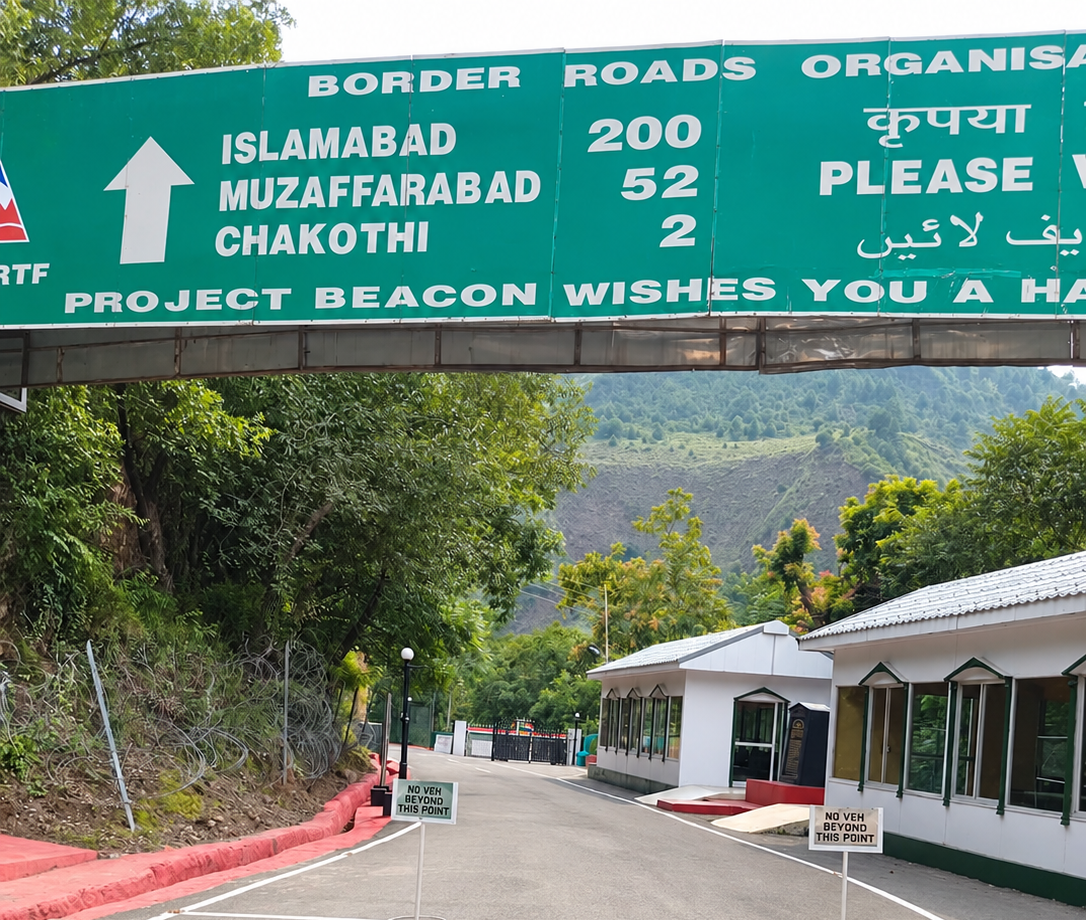
The Journey Towards Uri
The route from Srinagar runs first to Baramulla along the main Srinagar–Baramulla highway, then turns onto the road toward Uri, following the Jhelum's valley as the terrain narrows and climbs.
This stretch is where the trip starts to feel genuinely different from a typical Kashmir Valley drive steeper gorge walls, denser pine cover, and villages that feel more removed from the valley's main tourist circuit than almost anywhere else accessible as a day trip from Srinagar.
Sheeri — A Beautiful Landscape Along the Way
Sheeri, a village roughly ten kilometres west of Baramulla town, is one of the more visually distinctive stretches on the route known locally for its apple orchards and paddy fields, and for the landscape shaped by the canal and infrastructure associated with the Uri hydroelectric project further down the valley.
On one side of the road, open green fields; on the other, pine forest climbing the slope. It isn't an officially designated tourist attraction in its own right, more a section of the drive worth noticing rather than passing through without a glance the kind of landscape that rewards an unhurried pace rather than a stop with a car park and a ticket counter.

Noorkha Waterfall — A Majestic Stop Before Uri
Noorkha, also spelled Noorkhah, sits in Boniyar tehsil, within the broader Uri area of Baramulla district, close to Kazinag National Park. By most accounts it drops from a height of roughly 100 feet, fed by the surrounding forested slopes, and has in recent years moved from a largely local picnic spot to a genuine stop on the wider Uri day trip, alongside two other waterfalls in the same area Nambla and Mithwan, near Limber village that have drawn growing attention.
What makes Noorkha worth building into the day, rather than treating as an optional detour, is its position: it sits on the approach to Uri itself, meaning a traveller doesn't need to choose between a waterfall excursion and a border excursion the two sit along the same route.
The setting is genuinely forested rather than roadside; expect some walking from wherever vehicles can reasonably park, uneven and potentially slippery ground near the water, and a noticeably cooler microclimate in the immediate vicinity of the falls.
Exact access routes and current road conditions to the waterfall are worth confirming locally, particularly outside peak summer months.

Uri Eco Park and the Surrounding Landscape
An Eco Park on the way toward Uri adds a further recreational stop to the journey a managed green space distinct from the more rugged, natural setting of Noorkha.
The area has at points been associated with a zipline experience, though current operational status isn't something this guide can confirm with confidence, and it's worth checking locally, rather than assuming, whether this is currently running before building a visit around it.
Treat the Eco Park as a pleasant, optional stop within the wider journey rather than a primary reason to visit Uri.
Kaman Post — Experiencing Kashmir's Border Landscape
Kaman Post, also known as Kaman Aman Setu, is Uri's defining experience and the clearest reason this journey is described as border tourism rather than simply a scenic drive.
Following a sustained period without ceasefire violations along this stretch of the Line of Control, the Indian Army opened Kaman Post to civilian tourists in June 2023, promoting it specifically as a border tourism destination within the Uri sector.
What a visitor actually experiences here is a frontier landscape rather than a crossing: a viewpoint over the LoC itself, the historic Aman Setu bridge, a small museum, and a café/cafeteria where visitors can spend time before heading back toward Uri town.
This is not an experience built around crossing into Pakistan-administered territory it's an opportunity to stand at a historically significant, carefully managed frontier point and understand its place in Kashmir's recent history, under the guidance and rules of the administering authorities.
Permission for Kaman Post and What Travellers Should Know
Reaching Uri town does not, on its own, guarantee access to Kaman Post. Based on local experience, visitors need to obtain permission from the SDM or local administration at Uri before proceeding toward the border area, and reporting at the time of writing also indicates that visitors are required to submit valid government identification an Aadhaar card has been cited in official accounts to the concerned authorities before heading toward the LoC.
It is important not to treat this as a fixed, unchanging bureaucratic formality. Permission requirements and security protocols at a Line of Control location are, by their nature, subject to change depending on prevailing conditions, and can be tightened, relaxed or altered without much advance public notice.
Travellers should confirm the current procedure directly with the SDM or local administration at Uri before planning their day around a border visit, carry valid government-issued identification, and be prepared for the possibility that access on a given day may be restricted or unavailable regardless of how the trip has been planned.
No travel guide, this one included, can guarantee entry to Kaman Post on any specific date.
Aman Setu — A Bridge With History
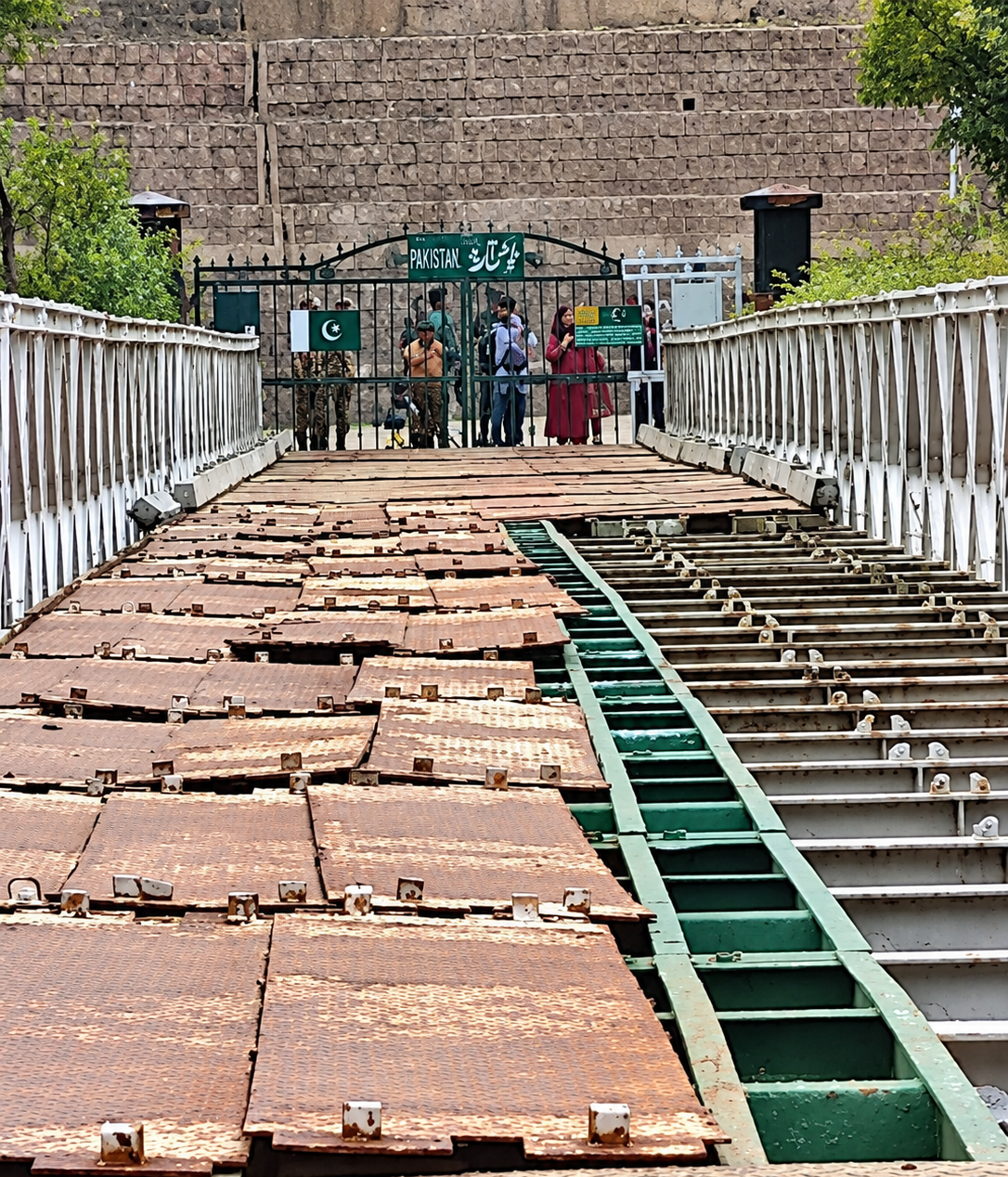
Aman Setu, meaning “Bridge of Peace,” is the bridge at Kaman Post that historically carried the Jhelum Valley Road connecting Srinagar to Muzaffarabad before Partition split the route. In more recent history, it became the crossing point for the Karwan-e-Aman bus service a cross-LoC service that allowed divided Kashmiri families separated by the Line of Control to travel and reunite, making the bridge a genuine symbol of connection between the two sides over the years that service operated.
It's important to be precise about what visiting Kaman Post today actually involves: tourists can view Aman Setu and the surrounding border landscape from the Indian side, but ordinary visitors do not cross the bridge, and movement across the LoC remains governed entirely by security and diplomatic arrangements between the two countries, unrelated to tourist access to the viewpoint.
This guide does not identify a specific locality on the Pakistan-administered side connected by the bridge, since that detail varies by source and is best confirmed through official and verified references rather than assumed.
Uri Museum and Café
A small museum has been established at Kaman Post, now situated at the post itself after being relocated there from Uri town some years ago.
It focuses on the history, culture and traditions of the region, along with material connected to the area's military history, including memorials to those who served along this stretch of the LoC.
A café or cafeteria at the post gives visitors somewhere to spend time before or after the viewpoint experience a human, unhurried element to what might otherwise be a brief, purely visual stop.
Neither the museum nor the café should be expected to be large-scale attractions; they add context and comfort to the Kaman Post visit rather than standing as destinations in themselves.

Can Uri Be Done as a Day Trip From Srinagar?
Yes . A conceptual route for the day looks something like: Srinagar → Baramulla → Sheeri → Noorkha Waterfall → Uri → Kaman Post / border experience → return to Srinagar.
This works as a long but manageable day trip provided travellers start early, allow genuine time for Noorkha Waterfall rather than rushing past it, and build in buffer time for the Kaman Post permission process which can take time on its own and is not guaranteed to be quick.
This is a full-day excursion rather than a casual half-day outing; treating it as the latter risks either missing the waterfall properly or running out of daylight before completing the border section and the return drive.
Exact kilometre figures and drive times vary by source, as noted above, so build in more time than the shortest quoted estimate suggests.
Best Time to Visit Uri
Uri is, broadly, an all-season destination, though each season changes the experience somewhat. Summer brings the greenest landscape and the most comfortable travel conditions, and is when Noorkha Waterfall and the area's other falls tend to carry the most water and the most visitors.
The monsoon and later summer months can change water levels and conditions at the waterfalls and along the Jhelum, which is worth factoring in if a specific water-based experience is the priority.
Autumn brings a different colour palette to the forested stretches along the route, generally with fewer crowds than peak summer. Winter gives the surrounding mountains a different, starker character, though road conditions can be affected by weather at this time of year and are worth checking in advance.
One constant across every season: border access to Kaman Post remains subject to current security and administrative conditions regardless of the time of year, and this should be confirmed separately from general seasonal planning.

Uri vs Keran vs Gurez
Cha | Uri | Keran | Gurez |
Landscape | River gorge, pine forest, western frontier town | Riverside border villages along the Kishanganga | High-altitude valley, dramatic mountains |
Main attraction | Noorkha Waterfall + Kaman Post/Aman Setu | Kishanganga riverside villages, slower border life | Chakwali last village of India Dard-Shin culture, Habba Khatoon peak, high valleys |
River | Jhelum | Kishanganga (Neelum) | Kishanganga (upper course) |
Border experience | Direct, developed — Kaman Post viewpoint and museum | Present, village-level, more understated | Present, but secondary to the valley experience itself |
Village experience | Moderate Uri town and surrounding hamlets | Strong intimate riverside village atmosphere | Strong — Dard-Shin villages across the valley |
Historical significance | High Jhelum Valley Road, Aman Setu, Karwan-e-Aman | Moderate — border village history | High — distinct Dard cultural history |
Nature/waterfalls | Noorkha, Nambla and Mithwan waterfalls | Riverside scenery rather than waterfalls | Alpine meadows, high mountains |
Infrastructure | Developing — improving road connectivity | Limited, quieter | Limited, more remote |
Day-trip suitability | Yes — feasible as a long day trip from Srinagar | Possible, but an overnight suits it better | Not realistic as a day trip — needs several days |
Recommended stay | Day trip, or one night for a slower pace | One to two nights | Several days |
Best suited for | Travellers wanting a natural stop plus border history in one day | Travellers wanting a slower, intimate border-village stay | Travellers wanting immersive high-altitude days |
These are different experiences rather than competing options choose Uri if you want to combine a genuine natural stop like Noorkha Waterfall with Kashmir's western frontier history in a single day; choose Keran for a slower, more intimate border-village experience along the Kishanganga; choose Gurez if you want to spend several days immersed in a high-altitude valley with its own distinct culture.
Practical Things to Know Before Visiting Uri
• Start early if attempting this as a day trip it's a long day, not a short outing.
• Carry valid government-issued identification at all times.
• Check current permission requirements for Kaman Post with the SDM/local administration before travelling, and do not assume access is guaranteed.
• Follow the instructions of security personnel and local administration without exception.
• Photography restrictions may apply around sensitive military installations — do not photograph restricted infrastructure if instructed not to.
• Carry basic food and water for the journey, while also supporting legitimate local cafés and small businesses along the route.
• Mobile network connectivity may be inconsistent along parts of the route — don't rely on it throughout.
• Road conditions can change seasonally, particularly in winter — check current conditions before travelling.
• Keep the itinerary flexible, especially around the Kaman Post section, which depends on conditions outside your control.
• At Noorkha Waterfall, exercise normal caution around water and on potentially slippery, uneven terrain.
Frequently Asked Questions
Where is Uri in Kashmir?
Uri is in Baramulla district, in the western Kashmir Valley, on the historic Jhelum Valley Road toward Muzaffarabad, close to the Line of Control.
Can Uri be visited as a day trip from Srinagar?
Yes, as a long but manageable day trip, provided travellers start early and allow time for both Noorkha Waterfall and the Kaman Post permission process.
Can tourists visit Kaman Post?
Yes, Kaman Post has been open to civilian tourists since June 2023, subject to current permission requirements and prevailing security conditions.
Do you need permission to visit Kaman Post?
Yes — based on local experience, permission from the SDM/local administration at Uri is required before proceeding toward the border, and valid government identification should be carried. Confirm the current procedure before travelling, as requirements can change.
What is Aman Setu?
Aman Setu, or “Bridge of Peace,” is the historic bridge at Kaman Post that once carried the Jhelum Valley Road between Srinagar and Muzaffarabad, and later served the Karwan-e-Aman cross-LoC bus service connecting divided Kashmiri families.
Can tourists cross Aman Setu?
No. Visitors can view the bridge and the surrounding border landscape from the Indian side; ordinary tourists do not cross into Pakistan-administered territory.
What can you see at Kaman Post?
A viewpoint over the Line of Control, the historic Aman Setu bridge, a small museum covering regional history and culture, and a café/cafeteria.
Is Uri safe for tourists?
Uri has seen growing civilian and tourist visits in recent years following a sustained period of calm along this stretch of the LoC, with the Army actively promoting border tourism in the sector. As with any border area, travellers should follow current official guidance, respect security instructions, and check prevailing conditions before travelling.
What is the best time to visit Uri?
Uri can be visited year-round. Summer offers the greenest landscape and strongest waterfall flow; autumn brings a quieter, different colour palette; winter changes the mountain character but can affect road conditions.
What is Noorkha Waterfall?
A waterfall in Boniyar tehsil within the wider Uri area of Baramulla district, dropping roughly 100 feet, that has become an increasingly popular stop on the way to Uri.
Is Noorkha Waterfall on the way to Uri?
Yes — it sits along the approach route before reaching Uri town, making it easy to combine with a border-focused day trip.
How is Uri different from Keran?
Uri combines a developed border-tourism experience at Kaman Post with a natural waterfall stop, suited to a single day trip. Keran offers a slower, more intimate riverside border-village atmosphere along the Kishanganga, better suited to an overnight stay.
How is Uri different from Gurez?
Uri is a manageable day trip from Srinagar; Gurez is a high-altitude valley requiring several days of immersion, with its own distinct Dard-Shin culture and dramatic mountain scenery.
Can Uri be visited throughout the year?
Yes, in general, though winter road conditions and border access conditions can vary and should be checked before travelling.
What are the best stops on the way to Uri?
Sheeri's landscape along the route, and Noorkha Waterfall, are the two strongest stops before reaching Uri town and Kaman Post.
Conclusion
Uri rewards travellers who treat the journey as seriously as the destination. The route through Sheeri, the stop at Noorkha Waterfall, and the measured, permission-based visit to Kaman Post and Aman Setu together make up a day that's about far more than standing near a border it's a genuine cross-section of western Kashmir's landscape and recent history, provided it's planned with the right expectations about access, timing and the conditions that can change at short notice.
If you're planning a Uri day trip, or want to combine it with other parts of western Kashmir, Tribesmen can help with the logistics and current permission guidance. For more on Kashmir's other border valleys, see our guides to the Gurez Valley and Lolab Valley, or explore Tribesmen's wider Kashmir Tour Packages for help planning a complete trip.


Comments